AgriTech Pilot: Earning RM5,000+ Flying Drones in Felda Plantations
By Low Jing Hong, Editor, SuperJobs|Reviewed by Farah, Reviewer, SuperJobs
Published |Last reviewed
Hiring now: browse jobs in Malaysia on SuperJobs, updated daily.
Quick Answer: Certified agricultural drone pilots in Malaysia earn RM 3,000–6,000 as employees or RM 500–1,500 per day as freelancers, with high demand from palm oil estates and paddy farms adopting precision agriculture. This guide covers certification requirements, costs, and career opportunities.
For decades, Malaysian youth have consistently migrated from rural kampungs and Felda settlements to the bright lights of Kuala Lumpur, universally viewing agriculture as "3D" work—Dirty, Dangerous, and Difficult.
But in 2026, a massive, technology-driven paradigm shift is happening deep within the Malaysian palm oil and agriculture sectors.
The chronic, severe foreign labor shortage that crippled the plantation sector post-pandemic has forced industry giants like Felda, Sime Darby Plantation, and IOI Corporation to aggressively pivot toward heavy automation. This desperate pivot has created an incredibly lucrative, entirely new career path: the Agricultural Drone Pilot (AgriTech Specialist).
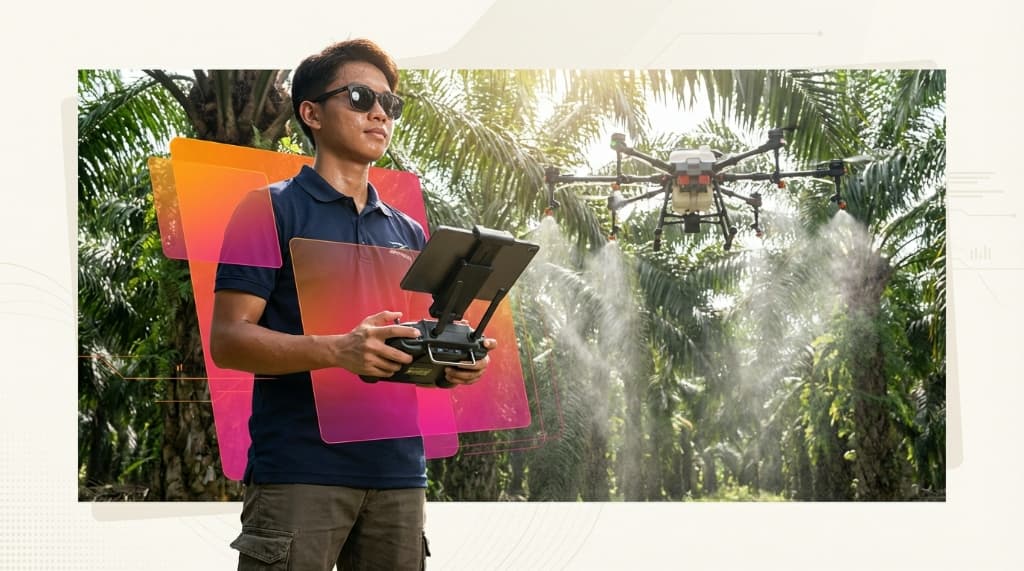
Far removed from the outdated image of a weary farmer bending over in the hot sun with a heavy, toxic pesticide tank strapped to their back, today's "AgriTech" specialists operate from the shade. Using advanced joysticks, ruggedized tablets, and satellite RTK (Real-Time Kinematic) positioning, they manage thousands of hectares of crops.
With monthly incomes that frequently exceed those of junior mechanical engineers working in crowded city offices, this role is successfully rebranding farming for the digital generation.
The Job: Translating Gamer Skills into the Real World
If you grew up playing complex flight simulators or possess excellent hand-eye coordination from competitive video gaming, you already possess the foundational spatial awareness required for this job.
However, these are not the small, plastic DJI camera drones used for wedding photography. Agricultural drones (like the DJI Agras series) are massive, heavy-duty industrial machines spanning nearly two meters wide and often carrying 30 to 50 liters of liquid payloads. They are designed specifically for "Precision Agriculture."
Your primary daily tasks will involve:
1. Aerial Spraying & Manuring
The most common and lucrative task is the aerial spraying of liquid fertilizers, herbicides, and pesticides over massive oil palm canopies or paddy fields. A heavy-duty drone can precisely cover in 15 minutes what takes a human manual laborer a full, exhausting day to spray. This incredible efficiency and the reduction of chemical waste is exactly why plantations are willing to pay pilots high premium rates.
2. Multispectral Crop Analysis
Beyond simply spraying liquids, senior drone pilots fly specialized mapping drones equipped with multispectral cameras. These sensors fly high over estates to accurately count trees, detect early signs of devastating diseases like Ganoderma in oil palm plantations, and analyze localized soil health before physical symptoms even appear on the leaves.
3. "Swarm" Management
As you gain experience, you do not just fly one drone. Senior AgriTech pilots often manage complete automated "swarms," sitting in a mobile command center (usually a modified 4x4 Hilux) and coordinating up to five massive drones simultaneously to cover massive estates spanning across Johor, Pahang, and Perak.
The Salary: Paid by Pure Productivity
Unlike traditional 9-to-5 office jobs with rigid, fixed salaries, agricultural drone pilots are almost exclusively part of the "Gig Economy" or work closely as contractors for specialized Drone Service Providers (DSPs) like Aerodyne or Poladrone.
The pay structure is heavily performance-based, usually calculated per hectare sprayed or surveyed.
- The Earnings: A hardworking, efficient pilot team covering large acreage during peak seasons can easily net RM 4,000 to RM 8,000+ per month.
- The Cost-of-Living Arbitrage: When comparing true disposable income, this rural role frequently wins against city jobs. A fresh graduate in a generic admin role in KL might nominally earn RM 3,000 but instantly lose RM 1,200 to room rental and daily LRT commutes. An AgriTech pilot living in a rural or semi-rural area (like Kluang, Johor or Teluk Intan, Perak) with significantly lower living costs earning RM 5,000 retains vastly more of their actual income.
During peak manuring seasons (pre-monsoon), highly experienced pilots willing to live out of a 4x4 and travel nomadically between different estates across the peninsula can earn exceptional bonuses, though the work is physically demanding due to constant travel and heavy battery management.
Strict Licensing: You Cannot Just Buy a Drone and Fly
Because these drones are massive, carry heavy chemical payloads, and operate in shared airspace, this is a heavily regulated aviation industry. The Civil Aviation Authority of Malaysia (CAAM) treats heavy agricultural drones with absolute seriousness. You cannot legally operate commercially without specific federal licenses.
1. The RCoC-B License
To legally fly drones heavier than 20kg (which covers essentially all commercial sprayer drones), you must obtain the Remote Pilot Certificate of Competency (RCoC-B) for Agricultural operations. This involves passing a rigorous theory exam covering airspace law, meteorology, and chemical handling, followed by a strict practical flight test handled by CAAM-approved examiners.
2. The AWC Company License
Additionally, if you plan to eventually start your own independent drone service company rather than working for someone else, your business entity must be heavily audited to obtain an Aerial Work Certificate (AWC) from CAAM. To avoid this immense paperwork burden initially, almost all new pilots start as employees by joining an established "Drone Service Provider" (DSP) fleet.
Why AgriTech is the Ultimate "Future-Proof" Career
Malaysia is the world's second-largest palm oil producer, and the entire multi-billion Ringgit industry is facing an existential crisis due to a chronic shortage of manual harvesters and general laborers.
The government's National 4IR Policy and MDEC's e-Ladang initiatives are currently pouring millions of Ringgit in grants to permanently digitize and automate this sector. As plantations rapidly and irreversibly move toward "Smart Farming," the demand for certified pilots is skyrocketing, while the supply of legally certified flyers remains chronically low.
Your Next Steps to Entering the Field
Agriculture is no longer a dead-end career choice for those who couldn't secure an office job; it is a high-tech frontier offering massive autonomy and excellent pay.
- Get Certified: Start by searching for CAAM-approved drone academies (Approved Training Organizations - ATO) located in tech hubs like Cyberjaya or specialized agricultural academies (often tied to local universities like UPM) to get your RCoC-B certification.
- Network: Joining active Facebook groups like the "Malaysia Drone User Group (MDUG)" is an excellent way to network directly with DSP fleet managers and find immediate vacancies for upcoming estate projects.
Search Smart: Do not search for "farmer." Visit SuperJobs.my and strictly filter for tech-forward keywords like "UAV Pilot," "Commercial Drone Operator," "AgriTech Sprayer," or "Precision Agriculture Specialist" to launch your aviation career.
Take the Next Step
- Browse green jobs on SuperJobs — Find ESG and sustainability roles in Malaysia
- Search salary benchmarks — Compare ESG salaries across industries
- Research companies — Find employers committed to sustainability
Related guides
- Carbon Accounting GuideCarbon accounting is moving from environmental departments to finance departments. Learn why Malaysian accountants must master greenhouse gas protocols in 2026.
- Climate Tech StartupsMalaysia's climate tech scene is heating up. A list of the most active climate startups, the roles they hire for, and how fresh grads can break into them.
- ESG Analyst JobsBursa Malaysia's strict reporting mandates have made ESG Analysts essential. Understand the daily responsibilities, skills, and salaries for ESG roles in Malaysia.