Attending Career Fairs in Malaysia: What to Bring, Say and Do
By Low Jing Hong, Editor, SuperJobs|Reviewed by Farah, Reviewer, SuperJobs
Published |Last reviewed
Hiring now: browse jobs in Malaysia on SuperJobs, updated daily.
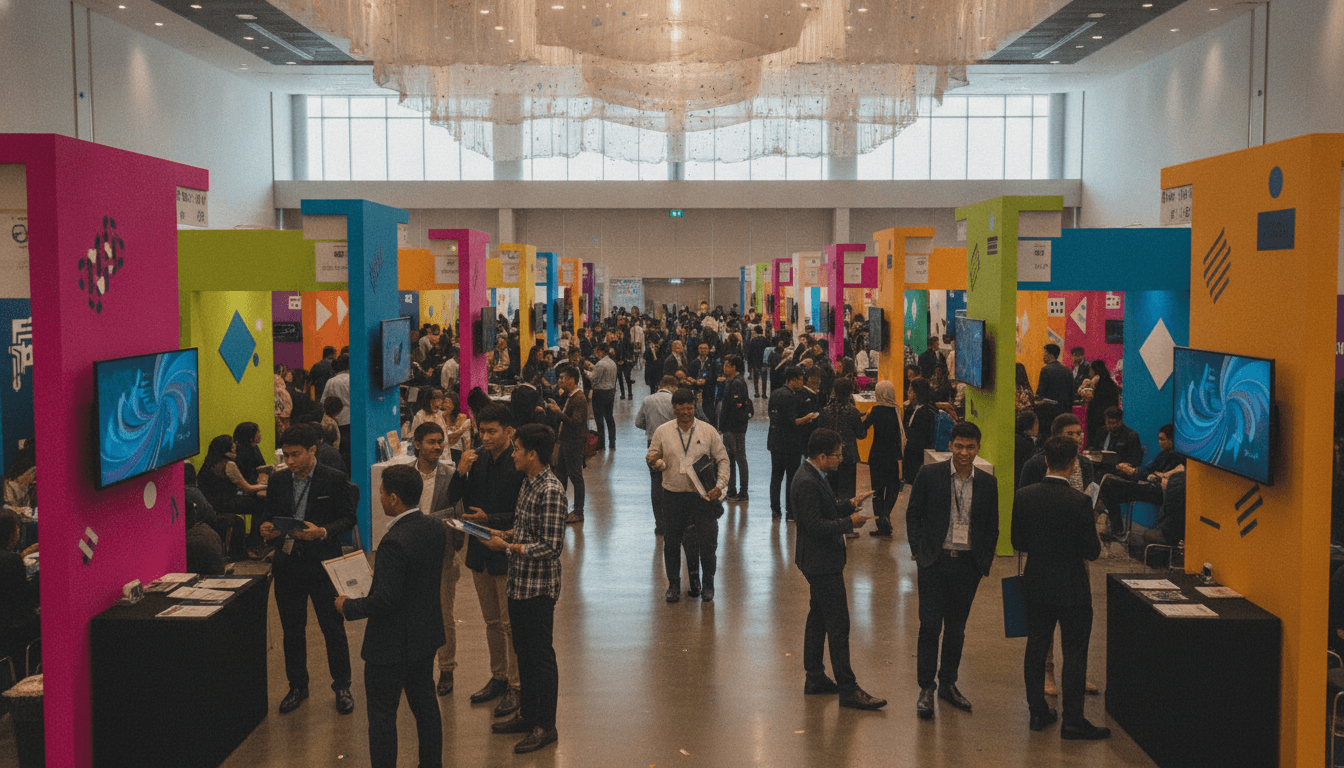
Quick Answer: To succeed at a Malaysian career fair, research 5–8 target employers beforehand, bring 10–15 printed resumes plus a QR code linking to your LinkedIn or portfolio, deliver a 30-second elevator pitch, ask questions that show research, and follow up with every recruiter within 24–48 hours. The follow-up is where most candidates fail — and where you can win.
SuperJobs Insight: Fresh-grad salaries in Malaysia typically range from RM2,500–RM4,500 a month, with tech and finance roles paying more — knowing the benchmark for your target role helps you answer the "expected salary" question recruiters often ask right at the booth. Check salary benchmarks →
1. Are Career Fairs Still Worth Attending in 2026?
Honest verdict: yes, but not for the reason most students think.
If you attend expecting to walk out with a job offer, you'll be disappointed — on-the-spot offers are rare. What career fairs actually give you is something job portals can't: a face-to-face impression with a real recruiter before your CV enters the pile. When you apply online afterwards and mention the conversation, you're no longer application #347 — you're "the student who asked about our graduate rotation programme".
Fairs are also unmatched for intelligence-gathering: which companies are actually hiring fresh grads, what skills they keep mentioning, and how their people talk about working there. Fifteen booth conversations teach you more about the Malaysian job market than fifty hours of scrolling.
Skip fairs only if you're already deep in interview processes. Otherwise, one well-prepared fair a semester is high-ROI.
2. Before the Fair: Research and Target List
Walking in without a plan means drifting toward the booths with the best free gifts. Do this instead:
Prep checklist (2–3 days before):
- Get the exhibitor list from the fair's website or your university career centre.
- Shortlist 5–8 target companies — enough for quality conversations without rushing.
- Research each target: what they do, recent news, and their live openings (check their company profile on SuperJobs and careers page).
- Prepare one tailored question per company — this alone puts you in the top 10% of attendees.
- Rank your list: visit target #3 or #4 first as a warm-up, then hit your top choices once you've found your rhythm.
- Plan logistics: smart casual or business attire, arrive within the first two hours while recruiters are fresh.
3. What to Bring (Physical + Digital)
Physical
- 10–15 printed resumes in a clean folder (not folded in your bag). One page, updated, error-free — run it through the free CV Checker the night before.
- A notebook and pen — jot recruiter names and conversation notes immediately after each booth; you will forget by booth five.
- Simple business cards (optional) — name, phone, email, LinkedIn URL. Cheap to print and memorable for a student.
- Water and a light snack — fairs run long, and you want energy for your top-choice booths.
Digital
- A QR code on your phone (or printed on your resume/card) linking to your LinkedIn profile or portfolio — recruiters can scan it in two seconds while you talk.
- PDF resume on your phone, ready to AirDrop, WhatsApp or email on the spot.
- Your LinkedIn app open — some recruiters prefer to connect immediately; make it effortless.
- Portfolio link for design/tech/media roles — a live project beats any description of it.
4. Elevator Pitch: A 30-Second Framework
When the recruiter says "So, tell me about yourself", you have about 30 seconds. Use this four-part frame: Who → What → Proof → Why you're here.
"Hi, I'm Aina, a final-year marketing student at USM. I specialise in social media analytics — during my internship at a local F&B brand, I grew their TikTok engagement by about 40% in three months. I saw that your team is expanding its digital marketing arm, and I'd love to learn what you look for in your graduate hires."
Why this works:
- Who: name, course, university — 5 seconds.
- What: your specialisation or interest, not just your degree.
- Proof: one concrete number or project. One is enough.
- Why you're here: shows you researched their company and hands the conversation back to them.
Practise it out loud until it sounds natural, not memorised. Prepare a slightly different closing line for each target company.
5. Smart Questions to Ask Employers
"Are you hiring?" wastes the moment — the answer is on their banner. Ask questions that make the recruiter think and remember you:
About the role and growth:
- "What does the first six months look like for a fresh grad who joins your team?"
- "What separates the graduate hires who thrive from those who struggle?"
- "Does your graduate programme rotate across departments, or do we specialise early?"
About skills and hiring:
- "Which skills are you finding hardest to hire for right now?"
- "If I apply online after today, is there anything I can do to make my application stand out?"
About them (people love this one):
- "What's kept you at the company?"
Always close with: "May I have your name or card so I can follow up?" — this single question sets up the step where most candidates fail (see section 7).
6. How to Stand Out from the Crowd
Real tactics that work at Malaysian fairs — no gimmicks:
- Reference something specific: "I read that you're opening a new hub in Penang — will graduate roles be based there too?" Instant differentiation from 200 generic conversations.
- Lead with proof: open your portfolio on your phone, mention your FYP result, cite an internship metric. Concrete beats adjectives.
- Write notes in front of them. Jotting down what the recruiter says signals seriousness — almost nobody does it.
- Go at off-peak times for your top targets: the first hour, or during lunch lulls, when recruiters can actually talk.
- Be warm to everyone at the booth, including the junior staff and interns — they compare notes afterwards, and they may be your interviewer's colleague.
- Quality over coverage: eight genuine conversations beat twenty drive-by resume drops. Recruiters can tell the difference instantly.
7. Follow-Up After the Fair (Where Most People Fail)
Here's the uncomfortable truth: recruiters meet hundreds of students per fair, and most resumes collected go into a pile. The follow-up within 24–48 hours is what pulls yours out.
The 24–48 hour rule: send a short LinkedIn connection request or email to every recruiter you spoke with, while they can still remember your face.
"Hi Mr. Rahman, it was great speaking with you at the UM Career Fair yesterday — I especially appreciated your advice about starting in a regional role. As mentioned, I've applied for the Graduate Analyst position (application #GA-2214). I'd be glad to share anything further. Thank you again for your time!"
The formula: where you met + one detail from your conversation + the concrete action you took + gratitude. Four sentences, no essay.
Then actually apply to the roles you discussed — through their portal or SuperJobs — and mention the fair conversation in your application or cover note. A week later, if a recruiter accepted your connection but the application is quiet, one polite check-in is fine. Beyond that, let your application do the work.
8. Top Career Fairs in Malaysia to Attend
Mark these categories in your calendar — most run annually:
- University career fairs — UM Career Fair, USM Career & Postgraduate Expo, UPM, UKM and UTM career carnivals, plus private university fairs (Taylor's, Sunway, APU, Monash Malaysia). Usually free for students and the most fresh-grad-friendly.
- Large public career expos — major national job fairs held at venues like KLCC Convention Centre, MITEC and Mid Valley Exhibition Centre throughout the year, often organised with government agencies or major job platforms.
- Government-linked fairs — PERKESO MYFutureJobs career carnivals, plus TalentCorp graduate employability events, held across states — good for GLC and public-sector exposure.
- Industry-specific fairs — tech and digital career fairs in KL and Penang (often MDEC-linked), engineering fairs around industrial hubs, and healthcare recruitment drives.
- Virtual career fairs — many Malaysian universities and platforms now run online editions; the same prep rules apply, with your camera and a quiet room replacing the firm handshake.
Check your university career centre's calendar each semester — and verify dates on official event pages, as schedules shift year to year.
Take the Next Step
- Check your CV before the fair — Free AI review in minutes
- Research exhibiting companies — Prepare tailored questions
- Check salary benchmarks — Answer the expected-salary question confidently
- Browse internships and fresh-grad jobs — Apply to roles you discussed
?Frequently Asked Questions
What should I bring to a career fair in Malaysia?
Bring 10–15 printed resumes in a folder, a notebook and pen, a QR code linking to your LinkedIn or portfolio, and a PDF resume on your phone ready to send instantly. Optional but memorable: simple business cards with your name, contact and LinkedIn URL.
What should I wear to a job fair in Malaysia?
Business or smart casual is safe for most Malaysian career fairs: a collared shirt or blouse with slacks or a knee-length skirt, and clean covered shoes. For banking, consulting and corporate-heavy fairs, lean formal; for tech and startup fairs, neat smart casual is fine.
Can I get hired on the spot at a career fair?
On-the-spot offers are rare, though some high-volume employers do conduct walk-in interviews at their booths. Treat the fair as the first step: make a strong impression, collect contacts, then convert through applications and follow-ups within 48 hours.
Apa yang perlu saya cakap dengan recruiter di job fair?
Mulakan dengan pitch 30 saat: nama, universiti, bidang, satu pencapaian konkrit, dan sebab anda berminat dengan syarikat itu. Kemudian tanya soalan yang menunjukkan anda dah buat kajian, contohnya tentang program graduan mereka. Akhiri dengan meminta nama atau kad recruiter untuk follow-up.
How do I follow up after a career fair?
Within 24–48 hours, send each recruiter a short LinkedIn message or email: mention where you met, one specific detail from your conversation, and the application you've submitted. This simple step separates you from the majority of attendees who never follow up at all.
Related guides
- Career Switch GuideStuck in the wrong career? Learn how to switch careers in Malaysia with a step-by-step plan and how to reposition your resume.
- Hidden Jobs MalaysiaUp to 70% of Malaysian jobs aren't advertised. Learn how to tap the hidden job market through networking, referrals, and direct outreach.
- Find a MentorGreat mentors accelerate careers. Learn how to identify, approach and build lasting mentor relationships as a Malaysian fresh graduate — with scripts.