EV Maintenance Specialist: The New "Mechanic" for 2026
By Low Jing Hong, Editor, SuperJobs|Reviewed by Farah, Reviewer, SuperJobs
Published |Last reviewed
Hiring now: browse jobs in Malaysia on SuperJobs, updated daily.
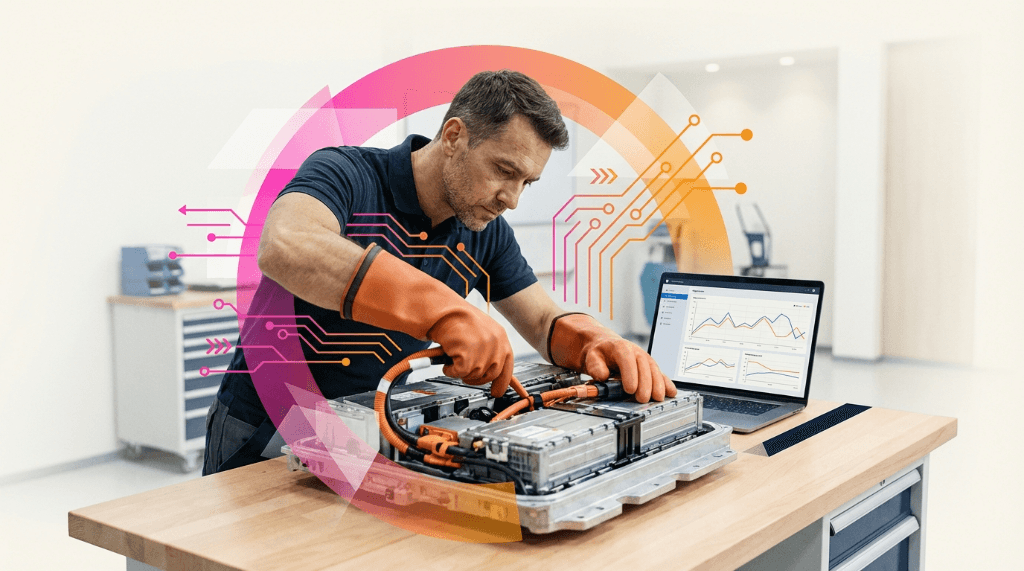
Quick Answer: EV maintenance specialists in Malaysia earn RM 3,500–8,000 as demand grows with the country's electric vehicle adoption push. This guide covers how to get certified, required skills, and career opportunities in the EV industry.
For generations, the traditional path to becoming an automotive mechanic was straightforward and entirely mechanical: get your hands dirty, learn how to change oil, strip a carburetor, and eventually master the Internal Combustion Engine (ICE).
But in 2026, the local automotive game has changed completely. With Malaysia's aggressive federal push toward becoming a regional Energy Efficient Vehicle (EEV) manufacturing hub, and the ambitious target of 10,000 public DC fast-charging stations now officially online, the traditional "workshop grease monkey" is rapidly becoming an endangered species.
The future—and the high-paying workshop salaries—now belongs exclusively to the EV Maintenance Specialist.
These are no longer just mechanics; they are essentially high-voltage IT technicians who diagnose complex software networks and massive lithium-ion battery systems. Because the strict risk of lethal electrocution is present every day (EV batteries operate anywhere from 400V to 800V), you cannot simply "figure it out" with a standard spanner.
This critical safety barrier has created a massive national skills gap—and for those smart enough to get certified early, a massive salary jump. This guide explains how to transition from fixing aging Protons to servicing cutting-edge Teslas and BYDs, and why this specific TVET path is currently paying better than many traditional university degrees.
The Daily Job: The Laptop Replaces the Spanner
If you walk into a modern EV service center in Glenmarie or Petaling Jaya today, it looks significantly more like a sterile laboratory or a server room than a traditional, oily workshop. There is no engine oil to change, no spark plugs to gap, and no choking exhaust fumes.
Your primary daily tasks will radically shift towards electronics and safety protocols:
1. High Voltage (HV) Deactivation & Safety Quarantines
Before any physical repair can happen on an EV, you must legally and safely "power down" the vehicle. One wrong move or dropped tool across an orange HV cable can be instantly fatal. You must follow strict lockout/tagout (LOTO) procedures, wearing heavy Class 0 insulated rubber gloves, to isolate the battery from the chassis before the car can be touched by junior staff.
2. Battery Health Diagnostics (SoH Analysis)
You will not be listening to engine noises; you will be reading real-time telemetry data. You will perform Battery Health Analysis using proprietary OEM diagnostic software to check the "State of Health" (SoH) and voltage consistency of thousands of individual lithium-ion cells. If a single module is dead or underperforming, you do not replace the whole RM 40,000 car battery; you perform precision surgery to drop the battery pack and replace or rebalance just that specific faulty module.
3. Over-The-Air (OTA) Troubleshooting
Much of modern EV maintenance doesn't even require lifting the car. Diagnostics involves hooking up to the car's CAN bus system and pushing firmware updates, recalibrating ADAS (Advanced Driver Assistance Systems) cameras, or debugging infotainment system faults, making you essentially an IT support specialist for a rolling supercomputer.
The Salary: Earning the "High Voltage" Premium Risk Pay
Why is the pay so high? Because the absolute liability is incredibly high. Traditional mechanics are strictly and legally forbidden to touch HV systems without active certification. This creates a severe bottleneck of qualified staff.
- Entry-Level (Level 2/3): While a traditional junior mechanic's salary typically caps out at RM 2,000 – RM 2,500, a freshly certified junior EV technician taking on basic diagnostics and HV isolation will see starting salaries begin at RM 3,500 – RM 4,500.
- The Master Technician (Level 4): For a Senior Master Technician with 5+ years of EV experience and full diagnostic certifications, you can confidently command RM 6,000 – RM 10,000+. This is incredibly common if you are hired by premium European EV brands (like Porsche or BMW) or if you are managing the maintenance for massive commercial EV logistics fleets (like electric delivery vans or buses).
Strict Licensing: Obtaining the "License to Touch"
You absolutely cannot legally work on EVs with just a standard SKM (Sijil Kemahiran Malaysia) Level 2 in Automotive Repair. You need specific, high-stakes add-on certifications recognized by both the automotive industry and the Department of Occupational Safety and Health (DOSH).
Option 1: The Global Standard (IMI Certification)
The absolute gold standard in Malaysia is the IMI (Institute of the Motor Industry) Certification from the UK, mandated by almost all luxury continental brands:
- Level 1 & 2: Covers basic EV Awareness and Routine Maintenance (safe for service advisors to perform basic checks).
- Level 3: Required for technicians actually repairing the vehicles safely alongside live HV components.
- Level 4: The pinnacle level for "Diagnosis, Testing & Repair," designed exclusively for Master Technicians determining faults within live, active high-voltage battery packs.
Option 2: The Local TVET Pathway (NOSS/SKM)
The Malaysian government has finally updated the National Occupational Skills Standard (NOSS). You should immediately look for local training centers offering the JPK / SKM "Hybrid & EV" Pathway—specifically aiming for SKM Level 3 (Hybrid & Electric Vehicle Servicing). Top accredited local centers driving this include TOC Automotive College, Despark College, and the Autotronics Centre of Excellence.
Understanding the True "Danger" Factor
A standard 12V car battery might give you a mild shock; an EV battery operating at 400V+ or 800V+ (in cars like the Porsche Taycan or Hyundai Ioniq 5) will kill you instantly if mishandled.
Beyond electrocution, EV specialists must manage the risk of Thermal Runaway—a chemical chain reaction where a damaged lithium battery can spontaneously combust hours or even days after an accident. EV technicians are uniquely trained in how to legally quarantine, monitor, and safely discharge these highly volatile "ticking time bombs."
Next Steps for Mechanics
If you are currently a traditional petrol mechanic or an automotive TVET student, do not get left behind servicing declining numbers of ICE engines.
You must upskill now. Apply for the Level 3 Hybrid/EV add-on if you already hold an SKM Level 2. Note that many of these advanced safety courses are currently claimable under HRD Corp or heavily funded by Perkeso (EIS) for retrenched industrial workers.
Search Smart: Do not just look for "Mechanic" online. Visit SuperJobs.my and actively filter for highly specialized titles like "HV Technician," "EV Specialist," "Battery Diagnostic Engineer," or "Hybrid System Diagnostician" to secure your high-voltage future.
Take the Next Step
- Browse automotive jobs on SuperJobs — live openings and hiring companies across Malaysia
- Browse tech jobs on SuperJobs — Find AI, software, and data roles in Malaysia
- Search salary benchmarks — Compare tech salaries across cities
- Plan your tech career — Get AI-powered recommendations
Related guides
- FinTech Hiring SkillsMalaysia's digital banking revolution is here. Discover the top 5 technical skills that major banks and FinTech startups are aggressively recruiting for in 2026.
- AI Hiring TrendsFrom AI-driven Applicant Tracking Systems (ATS) to video interviews, learn how Artificial Intelligence is reshaping the recruitment landscape in Malaysia and how you can adapt.
- AI-Safe Jobs MalaysiaWhich Malaysian jobs will AI replace and which will thrive? A data-driven look at industries, roles, and how to position your own career well before 2030.