Geriatric Tech Specialist: Care Economy Careers for an Aged Nation
By Low Jing Hong, Editor, SuperJobs|Reviewed by Farah, Reviewer, SuperJobs
Published |Last reviewed
Hiring now: browse jobs in Malaysia on SuperJobs, updated daily.
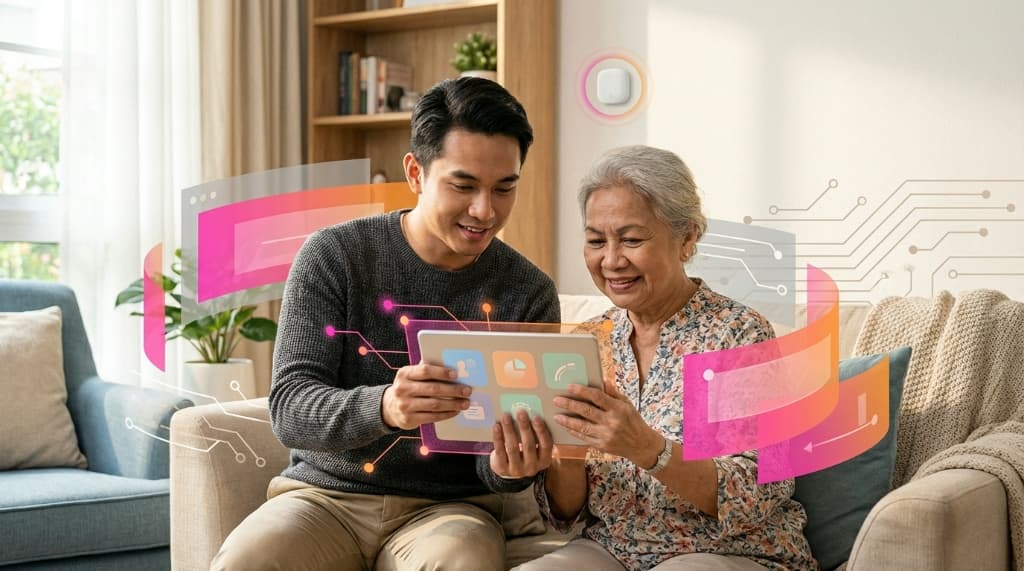
Quick Answer: Geriatric technology specialists combine healthcare knowledge with tech expertise to design elderly care solutions, earning RM 4,000–18,000 in Malaysia as the ageing population drives demand. This guide covers qualifications, technologies used, and career prospects in this emerging field.
In 2021, the Department of Statistics Malaysia officially declared that Malaysia has transitioned into an "Ageing Nation." By the fast-approaching year 2030, a staggering 15% of our entire population will be over the age of 60.
This looming demographic tsunami has already created a critical, widespread shortage of traditional healthcare workers and live-in caregivers. National reports starkly show we currently have an estimated ratio of only one specialized geriatrician for every 10,000 senior citizens.
However, this national crisis possesses a massive, highly lucrative silver lining: it has birthed an entirely new, high-value tech industry known as Gerontechnology (Geriatric Technology).
Gone are the days when the concept of "elderly care" simply meant changing adult diapers in a sterile, depressing nursing home. In 2026, the aged care sector is being completely revolutionized by Artificial Intelligence (AI), the Internet of Medical Things (IoMT), and advanced Smart Home integration.
Affluent Malaysian families are no longer just looking to hire foreign domestic helpers; they are actively seeking Geriatric Tech Specialists—highly trained professionals who can install, monitor, and flawlessly manage the backend technology that allows vulnerable seniors to independently "Age in Place" safely in their own homes.
This comprehensive guide explores how tech-savvy, empathetic Malaysians can successfully enter this booming "Silver Economy" without needing a medical degree.
The Daily Job: Serving as "IT Support" for Human Lives
A Geriatric Tech Specialist effectively bridges the frustrating gap between highly complex, life-saving medical devices and non-technical, easily confused senior citizens. You are essentially acting as part compassionate caregiver and part elite IT systems technician.
Your primary responsibilities will fall into three cutting-edge categories:
1. Smart Home Retrofitting (Ambient Assisted Living)
Your entry-level core task is performing physical home assessments and installing "Ambient Assisted Living" (AAL) hardware ecosystems.
- Fall Detection Sensors: You will install and calibrate advanced millimeter-wave radar sensors (like those designed by local startup SmartPeep). These discreet wall-mounted devices use AI to analyze body posture and instantly alert adult children via app if a parent suddenly collapses in the bathroom—crucially achieving this without using invasive, privacy-violating video cameras.
- Environmental Controls: You will set up automated smart lighting pathways to prevent midnight trips and install automated stove-shutoff devices to prevent kitchen fires triggered by forgetfulness.
2. Telemedicine Facilitation
Since a vast majority of seniors struggle to operate complex apps like Zoom, DoctorOnCall, or MySejahtera independently, you act as the vital bridge. You will permanently set up dedicated, ultra-simplified tablet interfaces. More importantly, you ensure that physical biometrics—such as digital blood pressure cuffs and continuous glucose monitors—flawlessly sync to the cloud via Bluetooth, ensuring the senior's remote cardiologist receives accurate daily data.
3. Remote Health Monitoring (Command Center Operations)
At a more advanced, stationary level, you might work in an off-site Health Command Center. This involves actively monitoring massive digital dashboards tracking the vital signs of hundreds of enrolled seniors simultaneously.
- Triage and Response: If an elderly client's wearable smartwatch suddenly detects a severe heart rate spike or an irregular ECG pattern (like Atrial Fibrillation), you are the first responder who triages the digital alert by immediately calling the family, assessing the situation over a two-way smart speaker, or directly dispatching a private ambulance.
Why Is This Niche "Exploding" in 2026?
The explosive demand is driven largely by the severe panic of the Malaysian "Sandwich Generation."
Successful working professionals in Kuala Lumpur often leave their aging parents behind in quieter hometowns like Ipoh, Taiping, or Melaka. Plagued by guilt and distance, these high-income earners are incredibly willing to pay a massive premium subscription for "Tech-Enabled Peace of Mind."
Additionally, under the highly publicized National Elderly Action Plan 2026-2030, the government now provides lucrative tax reliefs and direct grants for B40/M40 families purchasing certified home-care equipment. This sudden influx of government money has heavily fueled the consumer market for certified tech installers.
Finally, there is a booming, urgent need to address the national Dementia Crisis. With Alzheimer's cases officially projected to hit 200,000+, there is massive, desperate demand for discrete GPS tracking wearables (like smart-soles in shoes) and complex "Geo-Fencing" WiFi setups to instantly alert families and local police the moment a confused senior wanders outside their safe zone.
Salary Breakdown: Earning The "Tech" Premium in Care
Because this role explicitly requires robust technical literacy and troubleshooting skills, it natively pays significantly more than traditional, manual caregiving.
- The Freelance Installer: While a traditional live-in domestic caregiver (often relying on foreign labor) earns a stagnant wage between RM 1,800 and RM 2,500 monthly, a freelance Geriatric Tech Installer can easily charge a flat fee of RM 300 to RM 600 per home installation, turning a massive profit based entirely on volume.
- The Remote Monitor (Mid-Level): Full-time roles offer excellent stability. A Remote Health Monitor or Telehealth Coordinator working standard shifts from a centralized hub usually earns a solid base between RM 3,500 and RM 5,500.
- The Ecosystem Architect (Senior Level): At the absolute top end, an Elderly Smart Home Consultant tasked with designing massive, interconnected safety ecosystems for luxury, high-end retirement villages (like Sunway Sanctuary or Komune Living) can easily command corporate salaries ranging from RM 7,000 to RM 12,000+.
How to Pivot (No Nursing Degree Required)
You absolutely do not need to be a registered nurse to enter this field, but you must possess high empathy and extreme patience for explaining technology to the elderly.
- If you are an IT/Engineering Graduate: Your definitive edge is your deep knowledge of IoT protocols (Zigbee, Matter) and mesh WiFi networks. You can smoothly pivot into this niche by specializing in "Assistive Technology," focusing purely on physically configuring the SOS buttons, smart locks, and sensor arrays to ensure they remain online even during Unifi internet outages.
- If you are a Nurse, Pharmacist, or Physiotherapist: Your massive edge is innately understanding complex medical terminology and physical frailties. You can pivot by heavily up-skilling in "Health Informatics," transitioning away from physical lifting to instead reading digital data from smart wearables and accurately interpreting those trends for attending doctors.
Your Next Steps to Entering the Silver Economy
The "Silver Economy" is widely considered the ultimate recession-proof industry because desperate families will always find the money to keep their vulnerable parents safe.
To build immediate credibility and command higher rates, consider obtaining the Sijil Kemahiran Malaysia (SKM) Level 3 in Senior Care Centre Operation. While this sounds manual, it provides the essential, legally recognized baseline for deeply understanding elderly psychological needs. Technical credibility will come from securing Smart Home Integrator Certifications directly from dominant hardware brands like Tuya, Aqara, or Samsung SmartThings.
Search Smart: Do not manually search for "Caregiver" or you will be offered manual labor roles. Visit SuperJobs.my and strictly filter for tech-adjacent titles like "Telehealth Coordinator," "Smart Home Technician (Healthcare)," "Assistive Tech Consultant," or "Aged Care IT Support" to find your specialized role.
Take the Next Step
- Browse healthcare jobs on SuperJobs — live openings and hiring companies across Malaysia
- Browse green jobs on SuperJobs — Find ESG and sustainability roles in Malaysia
- Search salary benchmarks — Compare ESG salaries across industries
- Research companies — Find employers committed to sustainability
Related guides
- Green Building CareersGreen building is now baseline in Malaysian construction. Careers in GBI, LEED and sustainability consulting: pathways, credentials and real salaries.
- Renewable Energy EngineeringFrom large-scale solar farms in Kedah to green hydrogen projects in Sarawak, discover the engineering roles powering Malaysia's renewable energy transition.
- SME ESG ReportingMNCs are demanding carbon data from SMEs. Learn why this is happening now, how the 'Kick-Out' threat works, and how to use the Simplified ESG Disclosure Guide (SEDG).