Halal Blockchain Auditor: The Next Step for Islamic Finance Grads
By Low Jing Hong, Editor, SuperJobs|Reviewed by Farah, Reviewer, SuperJobs
Published |Last reviewed
Hiring now: browse jobs in Malaysia on SuperJobs, updated daily.
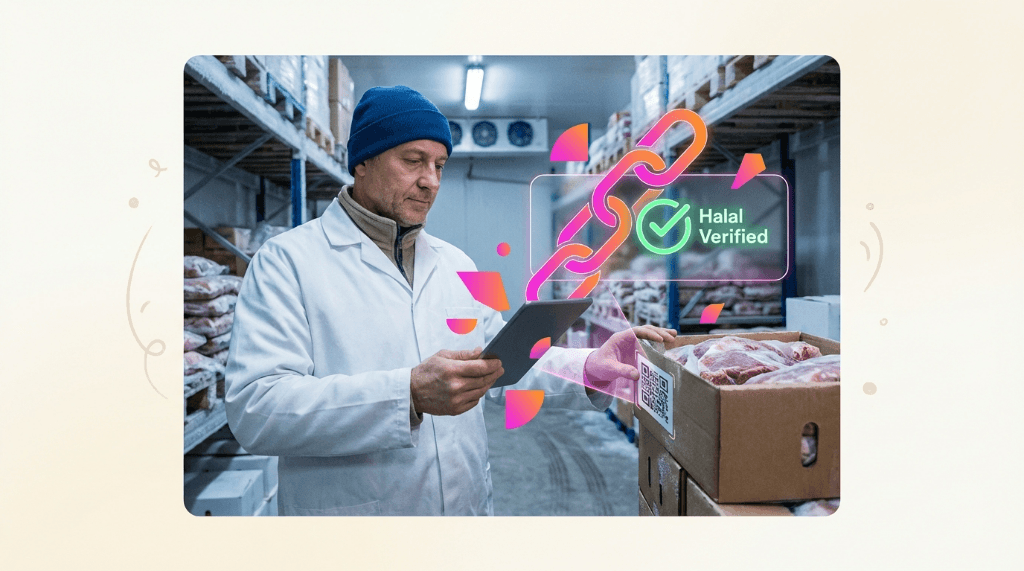
Quick Answer: Halal blockchain auditors verify halal supply chain integrity using blockchain technology, earning RM 5,000–20,000 in Malaysia as the global halal hub pioneers this niche. This guide covers qualifications, career outlook, and why blockchain matters for halal compliance.
For decades, the public perception of a "Halal Auditor" was strictly confined to a purely religious and manual role. It conjured images of an ustaz physically visiting abattoirs and slaughterhouses to ensure the Bismillah was recited correctly and the slaughtering knife was perfectly sharp.
But in 2026, the local Malaysian halal industry has experienced a massive, technology-driven paradigm shift.
Following the infamous and deeply damaging "Meat Cartel" scandal of 2020—where non-halal meat was systematically smuggled into the country and fraudulently relabeled as halal—the entire global Islamic economy realized a harsh truth: physical inspections at the factory level are no longer enough. Paper certificates can easily be photocopied and faked; decentralized blockchain data cannot.
This stark realization has berthed an entirely new, highly specialized tech career: the Halal Blockchain Auditor.
This is a modern professional who verifies the unalterable "digital thread" of a consumable product from farm to fork. This comprehensive guide explains how fresh graduates holding degrees in Islamic Finance, Shariah Law, and Supply Chain Management are successfully pivoting into this high-demand, high-paying niche that perfectly bridges traditional faith and cutting-edge technology.
The Daily Job: Auditing Data Integrity, Not Just Slaughter
A Halal Blockchain Auditor does not just physically check if the food is halal; they rigorously check if the underlying data is halal (truthful and untampered).
You act as the ultimate auditor of the "Smart Contracts" that automatically track the physical movement of the product across international borders. Your primary overriding task is to rigorously verify the "Digital Twin" of the physical product.
Every single shipping carton of imported frozen beef now carries a unique cryptographic QR code irreversibly linked to a public blockchain ledger.
- Data Forensics: You must audit these digital ledger entries to ensure the exact timestamp of the halal slaughter in the origin country flawlessly matches the shipping manifest. For example, if the blockchain timestamp shows the meat physically arrived in Port Klang three days before the recorded slaughter date at a farm in Brazil, you instantly flag the anomaly as definitive fraud.
The Focus on Supply Chain Forensics
Beyond basic document verification, you will perform deep supply chain forensics using advanced traceability platforms (like IBM Food Trust or VeChain) to spot unauthorized gaps in the critical Cold Chain.
- IoT Integration: If a refrigerated shipping container’s IoT (Internet of Things) temperature sensor broadcasts that the internal temperature illegally rose above -18°C for four unbroken hours during transit, the localized "Smart Contract" will automatically void its Halal status. Your job as an auditor is to legally confirm this voiding execution and prevent the spoiled batch from clearing local customs.
You will also heavily assist conservative SME companies in digitizing their outdated Halal Assurance Systems (HAS), slowly migrating them from massive, manual paper-trail files into sleek, digital Internal Halal Control Systems (IHCS) that integrate natively via API with JAKIM's federal database.
Why Is This Niche Exploding in 2026?
The explosive demand for this role in Malaysia is driven largely by lingering corporate PTSD over the "Meat Cartel" supply chain vulnerabilities.
Malaysian Muslim consumers still vividly remember the scandal. This highly publicized breach of trust has panicked premium international FMCG brands, Wagyu beef importers, and pharmaceutical supplement makers into aggressively hiring tech-auditors who can definitively prove to the public that their supply chain is 100% "Cartel-Proof."
Furthermore, Malaysia proudly remains the undisputed world leader in the Global Islamic Economy Indicator (GIEI). This means our domestically trained Halal Auditors are heavily sought after and frequently "exported" (flying business class) to Japan, South Korea, China, and Australia to rigorously certify their massive outbound food exports destined for OIC (Organisation of Islamic Cooperation) countries.
This highly specialized, cross-border skill set commands excellent pay precisely because it mitigates massive international reputational risk.
Salary Breakdown: Earning The "Tech" Premium
There is currently a massive, distinct salary divide separating traditional religious roles and modern, tech-enabled assurance roles.
- The Baseline: A traditional Junior Halal Executive working manually at an SME, whose role is primarily filing hardcopy paperwork for annual JAKIM cert renewals, typically earns between RM 2,500 and RM 3,500.
- The Analyst: In sharp contrast, a tech-savvy Halal Supply Chain Analyst who fully manages the digital IHCS platform and actively audits vast supply chain data points can easily expect a starting salary between RM 4,500 and RM 6,000.
- The Global Auditor: At the absolute top of the ladder is the Certified Halal Lead Auditor armed with proven Blockchain or deep ISO 22000 expertise. These elite professionals legally sign off on the integrity of incredibly complex, billion-dollar international supply chains for massive MNCs (like Nestlé, Unilever, or McDonald's). They consistently command premium salaries ranging from RM 8,000 to RM 15,000+ per month, excluding generous travel allowances.
How to Get Hired: Building the "Dual-Blade" Skill Set
To succeed and secure top salaries, you must actively prove to employers that you possess a rare "dual-blade" skill set that smoothly covers both deep Shariah compliance and modern systems architecture.
Step 1: Secure the Mandatory Shariah Licenses
First, you must obtain the foundational, legally recognized licenses.
- The Certified Halal Executive (CHEP) credential, officially issued by the Halal Development Corporation (HDC), is the absolute baseline legal requirement for any SME manufacturing company to establish an Internal Halal Committee.
- For pure auditing roles, you must also secure the advanced Certified Halal Internal Auditor (CHIA) certification.
Step 2: Add "Tech" to Your Resume
On the technical side, you desperately need to add quantifiable "Tech" acumen to your CV.
- You absolutely do not need to know how to code in Python or Rust, but you must deeply understand how Distributed Ledger Technology (DLT) functions on a conceptual level.
- Taking a verified short course on "Blockchain Basics for Supply Chain Management" (often available on platforms like Coursera or HRD Corp) is highly recommended.
- Additionally, you need general data proficiency. Focus specifically on learning the interfaces of massive, global ERP (Enterprise Resource Planning) systems like SAP or Oracle Cloud, as the vast majority of raw corporate Halal procurement data natively resides deep within these platforms.
Next Steps: Looking Beyond the Factory
Do not limit your early job search to just local food manufacturing factories. The real money and career growth are often found with the "Enablers" of the global halal ecosystem.
Massive third-party logistics (3PL) giants (like Tasco, DB Schenker, or DKSH) constantly need internal auditors to secure their vast, Halal-certified temperature-controlled warehouses (cold rooms). Tech SaaS providers and disruptive startups building generic Halal Traceability mobile apps desperately need Shariah graduates to design their core compliance logic. Even Foreign Halal Certification Bodies (FHCB) frequently hire Malaysian experts as highly paid consultants to audit massive manufacturing plants across China or India.
If you have a fresh Islamic Studies degree and are worried about low starting pay, enroll in the HDC Halal Executive Program immediately—it serves as the essential "bar exam" for this highly lucrative, future-proof industry.
Search Smart: Do not manually search for "Ustaz" roles. Visit SuperJobs.my and strictly filter for dual-domain titles like "Halal Assurance Tech," "Quality Assurance Specialist (Supply Chain)," "Internal Halal Auditor," or "Halal Integrity Analyst" to find your next premier role.
Take the Next Step
- Browse tech jobs on SuperJobs — Find AI, software, and data roles in Malaysia
- Search salary benchmarks — Compare tech salaries across cities
- Plan your tech career — Get AI-powered recommendations
Related guides
- Robotics & AutomationFrom factory floors to automated logistics warehouses, Robotics Engineers are the backbone of Malaysia's physical economy. Learn the required tech stack and top employers.
- Chip Design Engineer JobsMalaysia is moving up the value chain from IC packaging to IC design. Learn the skills, software, and salaries for Chip Design Engineers in Penang and Kulim.
- Skilled Trade JobsYou don't need a degree to earn well in Malaysia. Explore high-paying skilled trades, electrician, welder, HVAC and crane operator, and exactly how to start.