Oil & Gas Salary Guide Malaysia 2026: Upstream, Midstream & Petrochemical Roles
By Low Jing Hong, Editor, SuperJobs|Reviewed by Farah, Reviewer, SuperJobs
Published |Last reviewed
Hiring now: browse Oil and Gas jobs in Malaysia on SuperJobs, updated daily.
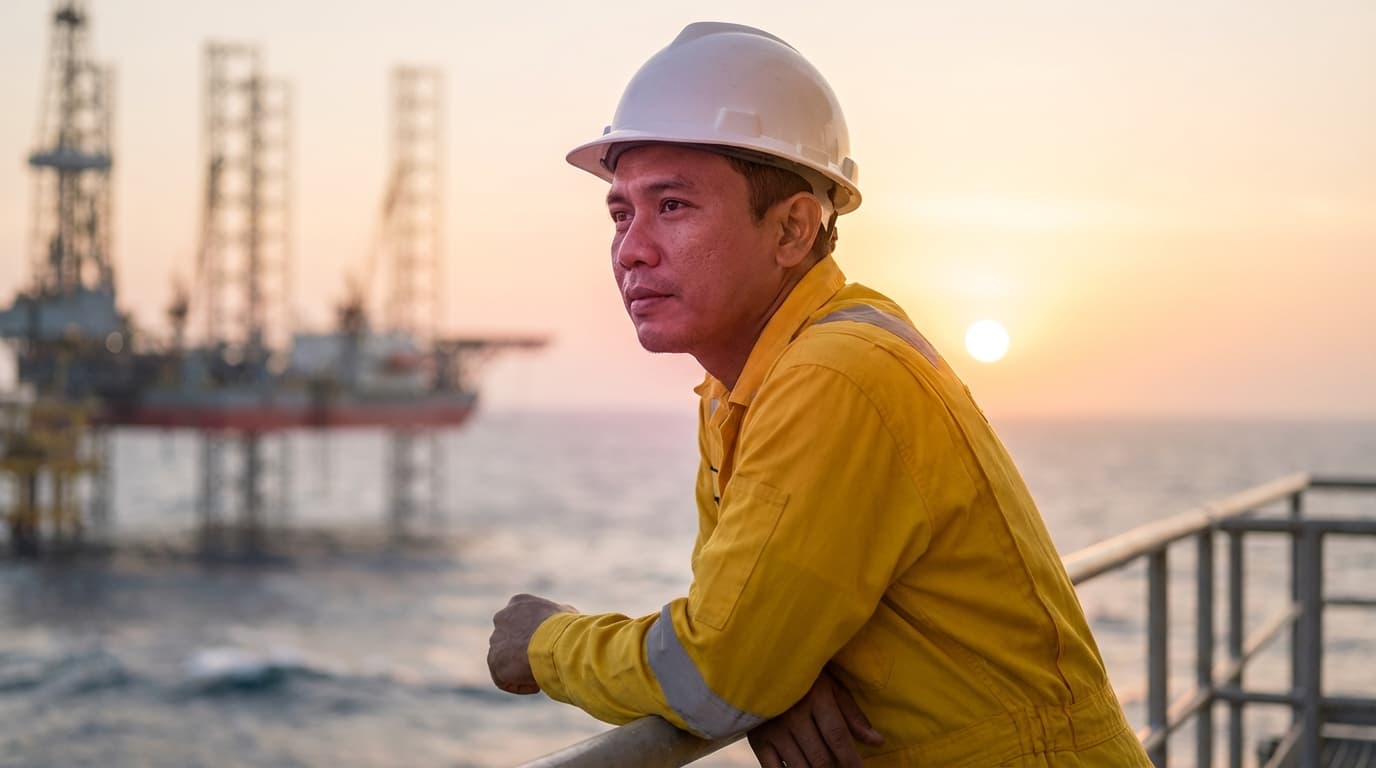
Quick Answer: Oil & Gas salaries in Malaysia range from entry-level to senior roles, with Kuala Lumpur offering the highest pay at 10–20% above the national average. This guide breaks down exact salary ranges by experience level, top-paying companies, and tips to maximise your earning potential in 2026.
SuperJobs Market Data (May 2026): Based on 5,759 active job listings on SuperJobs, Oil, Gas and Energy roles in Malaysia offer salaries ranging from RM 3,301 to RM 4,729 per month. Kuala Lumpur commands the highest averages at RM 3,798–5,493, followed by Selangor at RM 3,403–4,916 and Penang at RM 3,335–4,747. Browse Oil, Gas and Energy jobs on SuperJobs →
Despite the intense global pivot toward renewable energy, Malaysia's legacy Oil & Gas (O&G) sector mathematically remains the absolute highest-paying engineering and technical industry in the nation.
Driven by Petronas—consistently ranked among the most profitable national oil companies globally—and deeply entrenched massive foreign operators (Shell, ExxonMobil, ConocoPhillips), the Malaysian O&G sector in 2026 has successfully rebounded from the volatility of the early 2020s. Today, intense offshore exploration, massive deepwater drilling projects, and heavily complex downstream petrochemical refinements ensure that "Oil Money" easily outpaces generic corporate salaries.
This comprehensive guide breaks down the true, up-to-date 2026 salary benchmarks across Malaysia’s highly lucrative upstream, midstream, and downstream energy landscape.
2026 Salary Benchmarks: O&G Engineering Roles
The following tables represent aggregated Base Salary data specifically from Q1 2026. Crucial Note: In the O&G sector, Base Salary is frequently only half the story. Offshore workers consistently receive massive, untaxed daily allowances that can instantly increase their monthly take-home pay by 40% to 60%.
Upstream (Exploration & Drilling)
These are the highly specialized, extremely high-risk professionals tasked with actually finding and extracting crude oil and natural gas from deep below the ocean floor.
| Role Title | Fresh Grad (0 yrs) | Junior (1-3 yrs) | Mid-Level (3-6 yrs) | Senior (6-10 yrs) | Principal / Director |
|---|---|---|---|---|---|
| Petroleum Engineer | RM 4,800 – 6,500 | RM 7,500 – 10,500 | RM 12,000 – 17,000 | RM 17,000 – 26,000 | RM 26,000 – 40,000+ |
| Drilling Engineer | RM 5,000 – 7,000 | RM 8,000 – 11,500 | RM 13,000 – 19,000 | RM 19,000 – 28,000 | RM 28,000 – 45,000+ |
| Geoscientist / Geologist | RM 4,500 – 6,500 | RM 7,000 – 10,000 | RM 11,500 – 16,500 | RM 16,500 – 24,000 | RM 24,000 – 38,000 |
| Subsea Engineer | RM 4,800 – 6,800 | RM 7,500 – 11,000 | RM 12,000 – 18,000 | RM 18,000 – 26,000 | RM 26,000 – 40,000 |
| Reservoir Engineer | RM 5,000 – 7,000 | RM 8,000 – 11,500 | RM 13,000 – 18,500 | RM 18,500 – 27,000 | RM 27,000 – 42,000 |
Downstream (Refining & Petrochemicals)
These onshore engineers take raw extracted hydrocarbons and violently refine them into usable chemicals, fuels, and plastics at massive coastal facilities (like PIC in Pengerang).
| Role Title | Fresh Grad (0 yrs) | Junior (1-3 yrs) | Mid-Level (3-6 yrs) | Senior (6-10 yrs) | Manager / Director |
|---|---|---|---|---|---|
| Process / Chemical Engineer | RM 4,000 – 5,800 | RM 6,500 – 9,500 | RM 10,500 – 15,000 | RM 15,000 – 22,000 | RM 22,000 – 32,000 |
| Mechanical / Piping Engineer | RM 3,800 – 5,500 | RM 6,000 – 8,500 | RM 9,500 – 13,500 | RM 13,500 – 19,000 | RM 19,000 – 28,000 |
| HSE (Health & Safety) Officer | RM 3,500 – 5,000 | RM 5,000 – 7,500 | RM 8,500 – 12,000 | RM 12,000 – 17,000 | RM 17,000 – 25,000 |
| Instrument/Control Engineer | RM 4,000 – 5,500 | RM 6,000 – 9,000 | RM 10,000 – 14,500 | RM 14,500 – 20,000 | RM 20,000 – 30,000 |
The "Offshore Premium": Why Field Workers Over-Earn
In O&G, your physical location dictates your wealth. If you are willing to endure the brutal isolation and extreme physical danger of living on a rusted steel rig in the middle of the South China Sea, you are heavily compensated.
| Specialized Allowance | Typical Value Impact | Context |
|---|---|---|
| Offshore Day Rate (Standby) | +RM 200 – RM 600/day | Paid on top of your base salary for every single day your boots are physically on an offshore platform. |
| Hardship / Remote Location | +RM 1,000 – RM 3,000/month | Extra compensation required to convince top KL-based engineers to physically relocate to Bintulu, Miri, or Kerteh. |
| Hazardous Duty Pay | +RM 800 – RM 2,000/month | Standard supplementary payment for roles involving high-pressure H2S (Hydrogen Sulfide) gas extraction. |
| BOSIET / Valid Sea Survival | Mandatory | You cannot legally board an offshore helicopter without this certification. Lacking it completely disqualifies you. |
The "Tier System" Reality Check
The exact same "Process Engineer" role will pay vastly different base salaries merely depending on the corporate logo printed on the employee badge.
| Company Tier | Expected Base Salary Disparity | Examples |
|---|---|---|
| Tier-1 (Operators / Supermajors) | 100% (Baseline Max) | Petronas, Shell, ExxonMobil, ConocoPhillips, PTTEP. The absolute peak of compensation and job security. |
| Tier-2 (Major Service Companies) | -15% to -25% below Tier-1 | Schlumberger (SLB), Halliburton, Baker Hughes, Technip. They work far harder and execute the actual labor, yet get paid slightly less than the Operators. |
| Tier-3 (Local Sub-Contractors) | -35% to -50% below Tier-1 | Small Malaysian vendor agencies handling temporary fabrications, specialized manpower supply, and standard maintenance. |
4 Critical 2026 Industry Dynamics
- The Subsea Engineering Crisis: As Malaysia's shallow-water oil reserves aggressively deplete, operators are violently shifting focus to highly complex, ultra-deepwater drilling in Sabah. Consequently, niche Subsea Engineers who actually know how to deploy and maintain robotic ROVs and deep-sea wellheads are currently commanding blank salary checks.
- The "Energy Transition" Hybrid Pivot: Despite the high salaries, Petronas is pouring billions into Carbon Capture and Storage (CCS) and Hydrogen exploration. O&G reservoir engineers who can successfully re-brand themselves as "CCS Logistics Specialists" are instantly securing massive RM 25,000+ retention packages to prevent them from fleeing to green energy startups.
- The Bintulu/Miri Magnet: Sarawak remains the undisputed king of Malaysian natural gas. The massive expansion of the Bintulu LNG complexes guarantees that engineers willing to permanently relocate to East Malaysia will systematically out-earn their KL-based corporate counterparts by immense, double-digit margins.
- The Ruthless Expat Replacement: To desperately slash overhead costs, foreign operators are heavily localizing their senior management. Highly experienced native Malaysian drilling managers are explicitly being promoted into RM 40,000+/month positions that were historically reserved strictly for expensive British or American expatriates.
Verify Your Energy Salary: Are you currently working for a massive Tier-1 operator but getting paid like a Tier-3 vendor? Stop guessing your value. Instantly use the SuperJobs Salary Insights to comprehensively benchmark your specific pay, or aggressively search for highly lucrative, rotational offshore roles strictly on SuperJobs.my.
Take the Next Step
- Search salary benchmarks on SuperJobs — Compare your pay to the market with real Malaysian data
- Browse jobs on SuperJobs — Discover thousands of roles across Malaysia
- Plan your career path — Get AI-powered career recommendations
Live on SuperJobs: Oil and gas jobs in Malaysia
Data from SuperJobs postings, October 2026.
| Open roles now | 87 |
|---|---|
| Advertised monthly pay (25th / median / 75th percentile) | Not enough listings show a range (fewer than 10) |
| Internship allowance (25th / median / 75th percentile) | Not enough listings show a range (fewer than 10) |
| Top hiring companies | Exxonmobil Business Support Centre Malaysia (35), Hengyuan Refining Company Bhd (9), Petronas (9), Petron Corporation (9), Hibiscus Petroleum Berhad (6) |
Pay figures are the midpoints of salary ranges that employers chose to publish. How we calculate this.
Related guides
- Salary Negotiation 2026Don't leave thousands of Ringgit on the table. Learn how to benchmark and negotiate the 'AI Premium' for your efficiency quotient in the 2026 Malaysian job market.
- Semiconductor SalariesSemiconductor salaries in Malaysia for 2026: typical pay for process, product and test engineers, fresh graduate offers, careers and take-home pay.
- The Skill PremiumWhy does a Python Developer earn 40% more than a standard IT Executive? Understand the concept of the 'Skill Premium' and how to acquire skills that command higher pay.