The "Specialist" Allowance: Salaries for Chargeman & Steam Engineers
By Low Jing Hong, Editor, SuperJobs|Reviewed by Farah, Reviewer, SuperJobs
Published |Last reviewed
Hiring now: browse Engineering jobs in Malaysia on SuperJobs, updated daily.
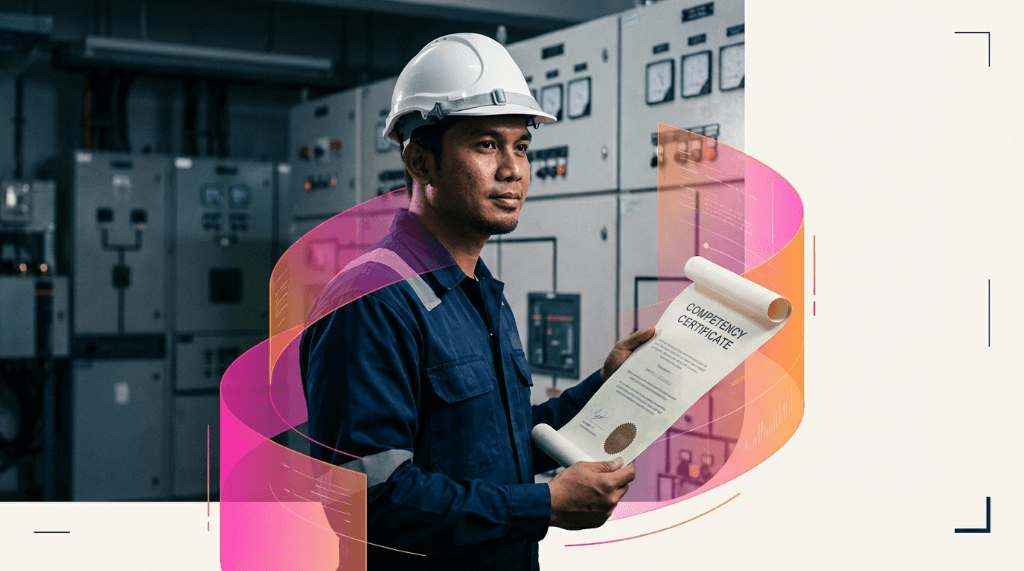
Quick Answer: Certified chargemen in Malaysia earn RM 3,000–6,000 monthly with specialist allowances of RM 200–800 on top, and experienced specialists can earn RM 7,000–12,000. This guide covers how to get certified, what the allowances are, and where the highest-paying opportunities exist.
SuperJobs Market Data (May 2026): Based on 5,759 active job listings on SuperJobs, salaries across Malaysia range from RM 1,700 to over RM 32,000 per month depending on role and experience. Kuala Lumpur offers the highest averages at RM 3,798–5,493, followed by Selangor at RM 3,403–4,916 and Penang at RM 3,335–4,747. Browse jobs on SuperJobs →
In the traditional, air-conditioned corporate world, your monthly salary is frequently determined by a complex mix of office politics, soft-skill negotiation, and annual KPI reviews.
However, in the gritty, high-stakes industrial world—across Malaysia's vast manufacturing plants, palm oil mills, and massive shopping malls—your salary is ruthlessly determined by a single piece of paper. For technical professionals in Malaysia, the absolute fastest, most guaranteed path to a high income is not securing a generic Master's Degree; it is earning a legally mandated, government-issued Competency Certificate, universally referred to on the factory floor as a "Ticket" or "License."
Two specific blue-collar roles currently command a massive, unique pay premium in 2026: The Electrical Chargeman and The Steam Engineer.
This extreme high pay is not based on generosity; it is based on leverage. Under strict Malaysian federal law—specifically the Electricity Supply Act 1990 and the Factories and Machinery Act 1967—a commercial factory literally cannot legally turn on its machines without these professionals physically employed on-site. If the designated "Competent Person" resigns or suddenly dies, the entire multi-million Ringgit plant must immediately, legally shut down its operations.
This immense leverage creates a highly unique, bifurcated pay structure: a standard Base Salary heavily subsidized by a massive, mandatory "Responsibility Allowance" (Elaun Tanggungjawab) that can easily double a technician's take-home pay.
1. The Electrical Chargeman: The "Resident" Premium
A Chargeman is a highly trained person who has been legally certified by the Energy Commission (Suruhanjaya Tenaga or ST) to safely manage high-voltage electrical systems. Desperate employers are constantly engaged in bidding wars for "Resident Chargemen"—meaning staff who will legally register their personal certificate with the ST specifically tied to that employer's building.
The salary structure in this niche relies entirely on the "Resident" factor and the voltage limit of the specific license:
- The Baseline (A1 - Low Voltage): An entry-level Chargeman A1 might earn a standard technician base salary of RM 2,500 - RM 3,200. However, once they register as the resident, a fixed responsibility allowance of RM 300 to RM 600 is immediately added, safely raising their total monthly income to a comfortable RM 2,800 to RM 3,800.
- The Mid-Level (A4 - High Current): This level manages heavier industrial loads. The base salary jumps to RM 3,500 - RM 4,800, seamlessly boosted by a much larger allowance of RM 800 to RM 1,500, bringing the total package strictly into the RM 4,300 to RM 6,300 bracket.
- The Gold Standard (B0 to B4 - High Voltage): The most massive financial jump occurs at the B-levels, which manage dangerous high-voltage substations (like 11kV or 33kV switchgears found in heavy manufacturing or data centers). Here, a high base of RM 6,000 - RM 9,000 is combined with a staggering, almost extortionate allowance often ranging from RM 2,000 to RM 4,000, easily bringing total monthly income to RM 8,000 to RM 13,000+.
Crucially, if you work in a building but do not actively register your license as the acting Resident (perhaps because the building already employs a more senior Chargeman), you only receive the base salary. The big money exclusively happens when you take full legal liability for the site.
- The "Visiting" Loophole: Enterprising senior B0 Chargemen also heavily utilize the legal "Visiting Engineer" loophole. They work full-time at one massive factory, but legally register to inspect up to two smaller, neighboring facilities precisely once a month, seamlessly generating an extra RM 2,000 to RM 3,500 per client in pure, legal side income.
2. The Steam Engineer: The "Boiler" King
If a Malaysian factory utilizes high-pressure steam in its production—which includes lucrative industries like food and beverage processing, rubber glove manufacturing (Top Glove/Hartalega), or palm oil refineries—it desperately needs massive industrial boilers. Because boilers are highly dangerous, explosive pressure vessels, the Department of Occupational Safety and Health (DOSH / JKKP) strictly mandates that a certified Steam Engineer must be continuously in charge of operations.
Unlike low-level Chargemen who are relatively common, Steam Engineers are exceptionally rare. The gruelling exams involve a notoriously difficult, aggressive face-to-face oral interview directly with senior DOSH officers in Putrajaya.
- Grade 2 Steam Engineer: Can legally supervise smaller industrial boilers (with a heating surface strictly under 2,000 sq ft). Their total combined package heavily ranges from RM 7,000 to RM 10,000, often working as a highly respected "Shift Charge Engineer" in independent power plants (IPPs).
- Grade 1 Steam Engineer: This is the absolute platinum standard, legally capable of supervising any size of mega-boiler in the country. Their total combined package safely ranges from RM 12,000 to RM 20,000+. Because the entire billion-Ringgit factory simply cannot run without their piece of paper, they possess immense political job security and are frequently promoted to lead as the overarching Plant Manager.
Why The Allowance Exists: It Is Pure "Danger Money"
You might logically wonder why conservative Chinese SME bosses willingly pay an extra RM 2,000+ per month just for a piece of paper. You are not being paid for harder physical work; you are being paid strictly for Liability (Jaminan).
When you register your specific competency certificate as the official Resident Chargeman or Resident Steam Engineer, you personally absorb the legal responsibility for the site.
- The Legal Risk: If the massive electrical switchboard catastrophically explodes, or the factory boiler violently ruptures due to poor scheduled maintenance, you—not just the wealthy factory owner—can be criminally charged in a federal court. Under the strict acts, proven professional negligence directly leading to a worker's death can instantly result in a massive fine and direct imprisonment. The huge monthly allowance is simply the company's way of financially compensating you for placing your own criminal freedom on the line every day.
How to Get "The Ticket": Unlocking The Paywall
This is uniquely not a degree you can simply study for across 4 years in a private university; it is a hardcore competency you earn exclusively through dirty, logged experience.
- For a Chargeman: You must work on the floor as a registered electrician or wireman for 3 to 5 years, meticulously logging your daily hours in a physical book. Only then can you sit for the Suruhanjaya Tenaga exam, which includes brutal written, practical (wiring), and oral components.
- For a Steam Engineer: You must physically work in a sweltering boiler room as a certified Boilerman or Assistant Engineer for a minimum of 2 continuous years before you are even eligible to request an interview seat for Grade 2 at DOSH.
Next Steps for Technical Grads
If you are currently a general Maintenance Technician or a fresh, starry-eyed Engineering university graduate, absolutely do not settle for being a generic "Process Engineer." A general, expensive bachelor's degree in Electrical Engineering is often worth significantly less in the brutal industrial SME market than a humble Diploma holder armed with a priceless B0 ST Certificate.
Your immediate priority upon graduating should be frantically searching for a mentor—a senior, licensed supervising engineer who is legally qualified (and willing) to sign off on your hours in your official logbook, which is notoriously the hardest part of the entire process.
Search Smart: Do not search generically for "Mechanic" or "Engineer." Visit SuperJobs.my and actively filter for highly specific, licensed titles like "Orang Kompeten," "Resident Chargeman (A4/B0)," or "Boiler Engineer Grade 1" to find the heavy-industry roles that actually respect—and aggressively pay for—your license.
Take the Next Step
- Browse engineering jobs on SuperJobs — live openings and hiring companies across Malaysia
- Search salary benchmarks on SuperJobs — Compare your pay to the market with real Malaysian data
- Browse jobs on SuperJobs — Discover thousands of roles across Malaysia
- Plan your career path — Get AI-powered career recommendations
Live on SuperJobs: Engineering jobs in Malaysia
Data from SuperJobs postings, October 2026.
| Open roles now | 220 |
|---|---|
| Advertised monthly pay (25th / median / 75th percentile) | RM3,000 / RM3,400 / RM4,250 (n = 74) |
| Internship allowance (25th / median / 75th percentile) | Not enough listings show a range (fewer than 10) |
| Top hiring companies | Black & Decker Asia Pacific (Malaysia) Sdn. Bhd. (13), Genting Malaysia Berhad (9), Schneider Electric (9), VSD Automation Sdn Bhd (7), KVC Industrial Supplies Sdn Bhd (5) |
Pay figures are the midpoints of salary ranges that employers chose to publish. How we calculate this.
?Frequently Asked Questions
What is a chargeman and how much do they earn in Malaysia?
A chargeman is a licensed electrical worker authorised to operate and maintain electrical installations in Malaysia. Certified chargemen earn RM 3,000-6,000 monthly, with experienced specialists earning RM 7,000-12,000. The role requires certification from the Energy Commission (Suruhanjaya Tenaga).
How do I become a certified chargeman in Malaysia?
Complete a recognised training programme, pass the Energy Commission examination, and register with the Suruhanjaya Tenaga. Requirements vary by competency level (A0-A4, B0-B4). Most candidates complete a diploma or certificate in electrical engineering before pursuing chargeman certification.
What specialist allowances are available for technical workers in Malaysia?
Specialist allowances vary by industry and certification level. Chargemen receive RM 200-800 monthly as a specialist allowance on top of base salary. Other technical certifications like NIOSH safety officer, DOSH competent person, and GreenRE assessor also command additional allowances.
Is there high demand for chargemen in Malaysia?
Yes, there is a significant shortage of certified chargemen in Malaysia. Growing infrastructure projects, industrial expansion, and stricter safety regulations are driving demand. Qualified chargemen can find employment easily across construction, manufacturing, property management, and utilities sectors.
Can chargemen work independently or do freelance work in Malaysia?
Yes, certified chargemen can register as independent electrical contractors with the Energy Commission. Freelance chargemen earn RM 300-1,000 per inspection or certification job. Many supplement their income with weekend or after-hours freelance work for property developers and factory owners.
Related guides
- Supply Chain Salaries2026 salary data for supply chain and logistics professionals in Malaysia. Compare pay for procurement managers, logistics coordinators, warehouse managers, and trade compliance officers across manufacturing, FMCG, and e-commerce.
- Telecom Salaries2026 salary data for telecommunications professionals in Malaysia. Compare pay for network engineers, 5G specialists, IoT engineers, and telecom managers across Celcom, Maxis, Digi, and DNB.
- Understanding Your Pay SlipHow to read a Malaysian pay slip in 2026: what EPF, SOCSO, EIS and PCB deduct, what your employer adds, a full worked example and when you must be paid.